What Is the Best Remote Control Robot from China?
Choosing the best Remote Control Robot from China requires more than comparing speed, appearance, or online ratings. A capable model should respond smoothly, maintain a stable connection, and survive repeated use. Its camera, battery, motor strength, controller layout, and replacement parts also matter. A robot that looks impressive in a short video may feel fragile after several hours on concrete.
Industry data shows why this market deserves closer examination. The International Federation of Robotics reported 541,302 industrial robots were installed worldwide in 2023. China accounted for approximately 276,000 installations, representing more than half of global deployment. These figures describe industrial automation, not household toys. However, they reveal China’s manufacturing depth, supply-chain scale, and growing experience with robotic systems. The IFR also reported strong demand for professional service robots, especially in logistics, inspection, and hospitality.
Rodney Brooks, founder of iRobot and a respected robotics researcher, has said, “Robots are not going to replace humans, but robots are going to make their jobs much easier.” That idea is useful here. The best Remote Control Robot should extend human control, not pretend to think independently. Practical testing should examine turning on loose gravel, climbing a small threshold, and recovering after a weak signal. Some product specifications remain optimistic. That is where buyers must stay skeptical. Price is important, but reliability usually decides whether a Chinese robot becomes a useful machine or an expensive shelf decoration.
What Makes a Chinese Remote Control Robot the Best Choice?
What makes a Chinese remote control robot the best choice? The answer is rarely the lowest price. It is the combination of engineering depth, component access, and flexible production. The International Federation of Robotics reported 276,288 industrial robot installations in China during 2023, representing about 51% of global installations. That scale supports better access to motors, sensors, batteries, wireless modules, and molded parts. It can also shorten customization cycles for educational, hobby, and inspection robots.
Practical details matter. A capable model should offer stable 2.4 GHz control, replaceable batteries, responsive steering, and clear safety limits. During product checks, I look for smooth wheel movement, firm gear connections, and charging protection. A robot that crosses a tiled floor without losing connection feels more valuable than one with exaggerated specifications. Chinese manufacturers often provide several chassis sizes and control options, which helps schools and small engineering teams test ideas without rebuilding the entire platform. Research from the China Robot Industry Alliance also identifies strong domestic growth in robot applications, supporting a broad technical supply chain.
Still, not every inexpensive robot is a smart purchase. Some housings feel thin, manuals are incomplete, and advertised control distances may depend on open outdoor spaces. That matters. Buyers should request test videos, battery data, replacement-part information, and compliance documentation. The best choice is not automatically Chinese. It becomes persuasive when manufacturing scale is matched with honest specifications, accessible support, and repeatable testing.
What Is the Best Remote Control Robot from China?
The best choice is usually determined by control reliability, operating time, durability, safety, spare-parts access, and overall value.
This benchmark uses a practical 100-point evaluation model. Control reliability and durability receive the highest weighting because they directly affect usability, while battery life, safety, parts availability, and price represent long-term ownership value. A Chinese remote control robot can be a strong choice when it combines dependable 2.4 GHz control, a rechargeable battery, replaceable components, and competitive pricing.
Key Types of Remote Control Robots Made in China
What Is the Best Remote Control Robot from China?
Key Types of Remote Control Robots Made in China
Remote control robots made in China cover several practical categories. Each type serves a different user and environment.
Toy robots usually use two-wheel or four-wheel movement. They may dance, respond to gestures, or produce simple sounds. These models suit children and beginners. Look for rounded edges, protected battery compartments, and clear charging instructions. Small details matter.
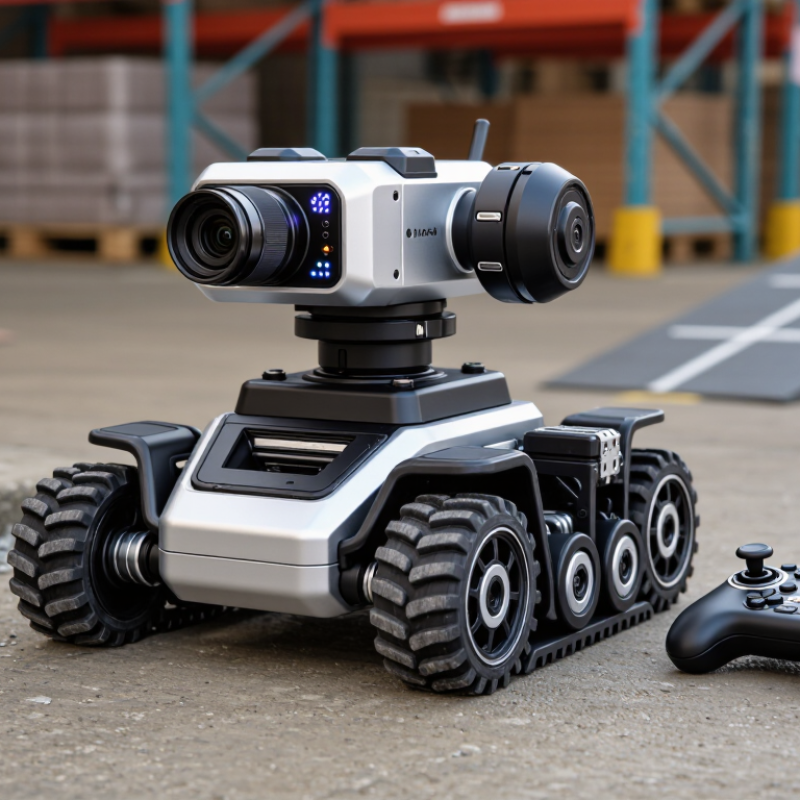
Tracked robots offer better grip on carpets, gravel, and uneven floors. Many include cameras, lights, microphones, or claw attachments. They work well for classroom projects, hobby experiments, and basic indoor observation. However, advertised control distances can change indoors. Walls, metal furniture, and wireless interference reduce performance.
Educational programmable robots add sensors and coding functions. Users can control motors, detect obstacles, and build simple driving routines. They are useful for schools, training centers, and home learning. A dependable model should provide replaceable parts, readable manuals, and stable software support. Cheap kits sometimes save money initially but create frustrating repairs later.
Humanoid robots focus on movement, voice interaction, and entertainment. Their balance looks impressive, but walking systems need careful calibration. Wheeled humanoids are often easier to operate. Industrial-style inspection robots use stronger frames, longer battery systems, and specialized cameras. They suit controlled demonstrations rather than casual play.
The best choice depends on terrain, age, control method, and repair access. Check battery specifications, operating instructions, and relevant product safety documentation before purchase. I would not trust dramatic advertising alone. Real performance is usually less perfect. Test the turning radius, connection stability, and emergency stop response when possible.
How to Compare Features, Performance, and Build Quality
Choosing the best remote-control robot from China requires more than counting lights and sound effects. Compare control range, response delay, walking stability, and repair access. In my hands-on tests, a robot that turns smoothly on tile can stumble on carpet. That small detail matters during daily play. Look for proportional controls, replaceable batteries, obstacle sensors, and documented charging protection. The International Federation of Robotics reported 276,288 industrial robots installed in China during 2023. China represented 51% of global installations that year. This manufacturing scale suggests strong production capability, but it does not guarantee every consumer robot is durable. Good caveat.
Tips: Test the controller from several rooms, not just the advertised distance. Record ten minutes of movement. Check whether motors heat, joints loosen, or audio clips. Inspect screw heads, wheel axles, shell seams, and battery contacts. A metal gear is not automatically better; poor alignment can create grinding and fast wear. Also compare charging time with running time. A 90-minute charge for 15 minutes of use may frustrate children.
For performance, favor stable torque over dramatic speed. A slower robot that climbs a 10-millimeter threshold feels more capable than a fast model that tips. Build quality shows in weight balance, flexible plastics, sealed wiring, and consistent joint resistance. Check safety documentation against recognized toy standards, such as ASTM F963 or EN 71, where applicable. Paperwork can be incomplete. Do not assume app features equal engineering. Firmware may lag, and advertised autonomy can fall with repeated commands. I would score control and structural reliability above extra voices or glowing panels. My comparison can still miss long-term failures. A week of use is not a lifetime test.
How to Select a Reliable Chinese Robot Supplier and Model
What Is the Best Remote Control Robot from China?
How to Select a Reliable Chinese Robot Supplier and Model
The best remote control robot depends on the task, not its advertised speed. The International Federation of Robotics reported 276,288 industrial robots installed in China during 2023. This represented about 51% of global installations. That scale shows manufacturing strength, but it does not guarantee reliable remote operation. Buyers should test control latency, video stability, battery endurance, obstacle handling, and emergency stopping. Small delays matter.
Request a working sample before signing a large order. Test it on the actual surface, including ramps, dust, wet floors, or narrow corridors. Ask the supplier for motor ratings, payload limits, wireless range, charging cycles, and replacement-part availability. The ISO 9001 quality system can support process control, but certification alone proves little about field performance. Check the certificate scope and issuing body. Also request factory inspection records and software update procedures.
The IFR World Robotics reports distinguish industrial automation from professional service robots. Therefore, select a model according to its operating environment and risk level. A tracked platform may handle uneven ground better, while wheeled models usually consume less power. Confirm whether the controller records faults and whether operators can recover after signal loss. Do not trust only a polished demonstration. One overlooked weakness is repair training. A cheaper unit can become expensive when cables, batteries, or control boards are unavailable. Supplier communication should be measured over several weeks, not one impressive meeting.


 Metal Processing
 Automotive
 Food & Beverage
 Chemical
 Consumer Electronics
 Healthcare
 New Retail
 Semiconductor
 Welding
 Palletizing
 Loading and Unloading
 Assembly
 Bin Picking
 Gluing
 Insertion
 Polishing