Top 10 Benefits of Using Water Ring Vacuum Pumps for Industry?
In the industrial sector, efficiency and reliability are paramount. The use of a Water ring vacuum pump has become increasingly popular due to its numerous benefits. This equipment operates on a simple principle. It utilizes water to create a vacuum, making it eco-friendly and cost-effective. Industries such as food processing, pharmaceuticals, and chemical manufacturing heavily rely on these pumps.
Water ring vacuum pumps excel at handling vapor and liquids. This feature enhances their versatility across different applications. They are also robust, requiring minimal maintenance. However, selecting the right model can be challenging. Some systems may struggle with high viscosity fluids. Yet, their ability to operate in harsh environments is a notable advantage.
Understanding the specific needs of your process is crucial. While benefits are clear, careful consideration is needed before implementation. In a rapidly evolving industry, the water ring vacuum pump stands out. Its role in boosting productivity is significant, making it a worthy investment for many businesses.
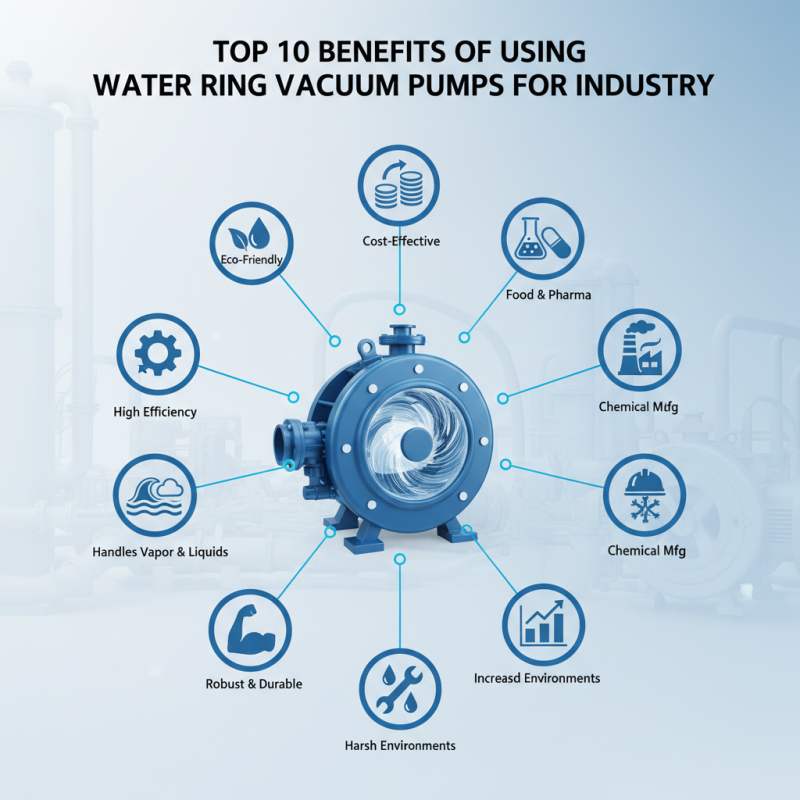
Benefits of Water Ring Vacuum Pumps: An Overview of Industrial Applications
Water ring vacuum pumps play a crucial role in various industrial applications. These pumps create a reliable vacuum through a simple yet effective mechanism. They operate by utilizing water as the working fluid, which helps to maintain stable performance and reduce operational risks. This method often translates into lower maintenance costs and energy efficiency—key benefits in today's industrial landscape.
In industries like food processing and pharmaceuticals, these pumps are invaluable. They ensure product integrity by providing a soft, gentle vacuum. This is vital for sensitive materials that cannot withstand high-pressure changes. Moreover, their ability to handle moisture and aggressive gases adds to their versatility. However, the dependency on water raises questions about sustainability. Industries must consider their water usage carefully, balancing efficiency with environmental impact.
Furthermore, while water ring vacuum pumps are effective, they are not immune to challenges. System design and installation can be complicated, requiring expert knowledge. Maintenance is another area needing attention. If neglected, it can lead to performance declines. Users must remain diligent to maximize the potential of these pumps while being aware of their limitations.
Top 10 Benefits of Using Water Ring Vacuum Pumps for Industry
Enhanced Process Efficiency with Water Ring Vacuum Pumps in Manufacturing
Water ring vacuum pumps are increasingly recognized for their efficiency in manufacturing processes. These pumps create a vacuum using water as the operating fluid. This design enhances energy efficiency and reduces environmental impact. According to industry reports, water ring vacuum pumps can achieve efficiency ratings of over 90%. This is significantly higher than traditional pumps, which typically fall below 70%. Manufacturers are increasingly prioritizing efficient technologies to meet sustainability goals.
One crucial aspect of using water ring vacuum pumps is their ability to handle aggressive chemical vapors. This is critical in many industrial applications. In fact, studies show that these pumps can efficiently manage vapor loads without the risk of corrosion that affects other pump types. This capability allows for longer operational life and fewer maintenance interruptions, which directly contributes to improved overall process efficiency.
However, there are challenges that users must consider. Proper system design is essential to maximize the potential of these pumps. If not designed correctly, they can lead to suboptimal performance. Regular assessments of water quality and pump maintenance are also necessary to prevent breakdowns. These factors require ongoing attention but highlight the necessity for detailed operational strategies in utilizing water ring vacuum pumps effectively.
Cost Savings Analysis: How Water Ring Vacuum Pumps Reduce Operational Costs
Water ring vacuum pumps are gaining attention for their operational efficiency and cost-saving potential. These systems work by using water to create a vacuum, which is effective in various industries. According to a report by the American Society of Mechanical Engineers, water ring pumps can save up to 30% on energy costs compared to traditional vacuum systems. This reduction can significantly impact overall operational expenses.
Operational costs are not only about energy. Water ring vacuum pumps require less maintenance, reducing downtime. This aspect can lead to further savings in labor costs and enhance productivity. A study from the International Journal of Industrial Technology reported that these pumps have a lifespan extending 15% longer than their counterparts. With fewer repairs and replacements, businesses stand to benefit considerably.
Tip: Regularly monitor your system’s performance to identify efficiency drops. Investigate those changes, as they can indicate potential issues before they become significant problems.
While the initial investment in a water ring vacuum pump might seem high, long-term savings can offset this expense. Evaluating total cost of ownership over time reveals the true financial benefits of these pumps.
Tip: Conduct a cost analysis before making the switch. Compare the total expenses of your current system against the expected savings from implementing a water ring vacuum pump.
Environmental Impact: The Eco-Friendly Benefits of Using Water Ring Vacuum Pumps
Water ring vacuum pumps are gaining attention for their eco-friendly nature. They operate using water as the working fluid, which reduces reliance on harmful lubricants. This design is less likely to pollute water sources compared to oil-based systems. The use of water makes these pumps safe for various environments. Their efficiency in recycling water minimizes wastage.
In industrial settings, water ring vacuum pumps generate lower emissions. This leads to a smaller carbon footprint than traditional vacuum systems. They manage noise levels effectively, which can benefit nearby communities. The ability to work at lower temperatures also reduces energy consumption, enhancing overall sustainability.
However, there are challenges. Water ring vacuum pumps require a consistent water supply, which may not always be feasible. Proper maintenance is crucial to prevent water contamination. Industries must weigh these factors when considering their implementation. Ultimately, the trade-offs are worth exploring for a greener future.
Top 10 Benefits of Using Water Ring Vacuum Pumps for Industry - Environmental Impact: The Eco-Friendly Benefits of Using Water Ring Vacuum Pumps
| Benefit | Description | Environmental Impact |
| Energy Efficiency | Water ring pumps consume less energy than traditional vacuum systems. | Reduction in electric consumption leads to lower carbon emissions. |
| Lower Noise Levels | Quieter operation compared to mechanical pumps. | Improvement in workplace noise pollution. |
| Use of Water | Utilizes water as a primary working fluid, which is abundant and recyclable. | Minimal environmental impact due to the use of a non-toxic medium. |
| Durability | Long-lasting components reduce waste and replacement frequency. | Less industrial waste from broken equipment. |
| Maintenance-Friendly | Easier maintenance compared to oil-sealed pumps. | Reduced need for harmful chemicals and lubricants. |
| Low Risk of Contamination | Less likely to introduce contaminants into the system. | Promotes cleaner processes and products. |
| Versatility | Suitable for various industrial applications and materials. | Flexibility in use reduces the need for multiple systems. |
| Cost Effectiveness | Lower operational costs over time due to efficiency. | Saves resources and reduces environmental burden. |
| Minimal Heat Generation | Operates at lower temperatures, reducing cooling needs. | Lowers energy consumption related to cooling equipment. |
| Recyclable Water Use | Allows for the recycling of water within the system. | Reduces wastewater and conserves water resources. |
Reliability and Maintenance: The Long-Term Advantages of Water Ring Vacuum Pumps
Water ring vacuum pumps are increasingly favored in various industrial applications. Their robust design often leads to remarkable reliability, significantly reducing operational interruptions. This is particularly critical in sectors like pharmaceuticals and food processing, where downtime can cost thousands in lost productivity. According to a recent industry report, failure rates for water ring vacuum pumps are 30% lower than their rotary vane counterparts, underscoring their durability.
Maintenance is another key advantage of water ring vacuum pumps. These pumps typically require less frequent servicing, translating to lower maintenance costs over time. A study highlighted that companies could save up to 25% on maintenance expenditures by transitioning to water ring technology. This reduction can be attributed to fewer moving parts and simplified designs. However, users must still ensure that the cooling water quality is consistent. Poor water quality can lead to mineral build-up, affecting pump performance and longevity.
In terms of energy efficiency, water ring vacuum pumps do show some variability. While many models are energy-efficient, some require higher energy inputs than anticipated. Industry experts suggest conducting regular efficiency audits to identify potential energy wastage. This ongoing assessment can help users balance their operational costs and environmental impact effectively. The key takeaway here is that while water ring vacuum pumps offer significant advantages, continuous monitoring and maintenance are essential to realize their full benefits.


 Metal Processing
 Automotive
 Food & Beverage
 Chemical
 Consumer Electronics
 Healthcare
 New Retail
 Semiconductor
 Welding
 Palletizing
 Loading and Unloading
 Assembly
 Bin Picking
 Gluing
 Insertion
 Polishing
