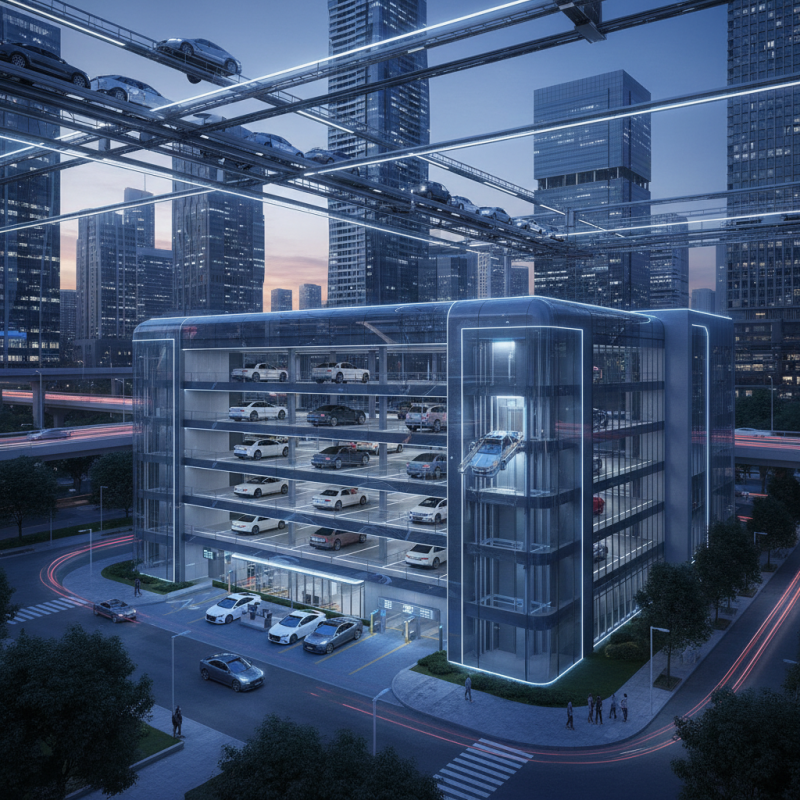
Top 10 Automated Parking Management Systems You Should Consider?
Automated Parking Management Systems are revolutionizing how we handle vehicle storage. According to a report by Grand View Research, the global smart parking market is expected to reach $8.6 billion by 2027. This growth stems from the increasing urban population and the demand for efficient parking solutions.
These systems enhance space utilization, reduce congestion, and lower operational costs. They utilize advanced technology to streamline the parking process, making it more convenient for users. However, challenges remain. Implementation costs and integration with existing infrastructure can deter some organizations.
Choosing the right Automated Parking Management System requires careful consideration. Factors like location, capacity, and user experience play a crucial role. As the market evolves, staying informed about the latest trends is essential. Understanding the complexities can make the difference between success and failure.
Overview of Automated Parking Management Systems
Automated parking management systems (APMS) are transforming urban environments. These systems use advanced technology to optimize space usage. They can reduce parking-related congestion and improve user experience. According to a recent study, cities implementing APMS report a 20% decrease in traffic congestion. Enhanced efficiency leads to happier drivers.
APMS typically include features such as real-time space availability and reservation capabilities. This technology minimizes wasted time searching for parking spots. Industry reports highlight that users save an average of 30 minutes per trip due to these systems. Utilizing sensors and software, APMS can balance demand and supply effectively. A clearer understanding of patterns emerges, allowing for better management.
Tips: Always analyze your local market needs before choosing a system. Consider scalability; not all systems are designed for future growth. Maintenance costs can add up surprisingly quickly. It's essential to factor in these expenses during planning. The integration of APMS with local transportation networks creates synergies that enhance urban mobility. Evaluating these aspects can lead to a more successful implementation.
Key Features to Look for in Automated Parking Solutions
When exploring automated parking solutions, key features are essential. These features enhance user experience and streamline operations. First, efficient space management is crucial. An ideal system should be able to optimize parking space usage while minimizing the time spent searching for a spot. Real-time availability updates can significantly reduce frustration for drivers.
Another important aspect is user accessibility. A good automated system should include intuitive interfaces. This makes it easy for users to navigate and operate the system without extensive training. Mobile app integration can provide a seamless experience, allowing users to reserve spots or check availability remotely.
Safety and security features also deserve attention. Keycard access and surveillance cameras enhance protection. However, some systems struggle with integrating these elements effectively. Regular updates and feedback from users can reveal flaws. Addressing these issues is vital for building trust and ensuring reliability in parking management systems.
Benefits of Implementing Automated Parking Management Systems
Automated parking management systems offer numerous benefits for urban environments struggling with limited space. A recent report by the International Parking Institute states that nearly 30% of urban traffic is caused by vehicles searching for parking. This statistic highlights the urgency for solutions that enhance efficiency. With automation, parking space utilization increases, making it possible to fit more vehicles into the same footprint.
Implementing these systems can reduce operational costs by up to 20% annually. By automating ticketing and payment processes, labor costs drop. Additionally, maintenance costs are lower when systems can operate without extensive human oversight.
Data shows that cities using automated systems see a decrease in congestion, making them more appealing to residents and visitors alike.
However, the transition may not be without challenges. There is a learning curve for both operators and users. Some people may resist technological changes. Integrating these systems smoothly requires proper training and ongoing support. Despite potential drawbacks, the advantages of reduced traffic and optimized space usage present a compelling case for adopting automated parking management systems in urban centers.
Comparison of Top Automated Parking Management Systems
Automated parking management systems are becoming essential in modern urban planning. These systems increase efficiency and optimize space usage. They also minimize the need for human intervention. Comparing various systems can help identify the best fit for specific needs.
Consider the ease of integration. Some systems boast compatibility with existing infrastructure. Others may need significant modifications. It’s crucial to assess your current setup before choosing. Evaluating user-friendly interfaces is also important. Systems that offer intuitive dashboards can enhance operational efficiency.
Cost is another significant factor. Some systems come with high initial investments. Others may have lower upfront costs but higher maintenance fees. It's vital to weigh these options carefully. Additionally, consider system updates. Regular updates can ensure safety and compliance with regulations. However, they might also disrupt operations briefly. Balancing immediate needs with long-term goals is essential.
Top 10 Automated Parking Management Systems Comparison
| System Name | Features | Capacity | Technology | User Interface | Cost |
| System A | Real-time monitoring, mobile app integration | 500 vehicles | Sensor-based | Web and mobile accessible | $$$ |
| System B | Reserved parking, license plate recognition | 300 vehicles | Camera-based | User-friendly dashboard | $$ |
| System C | Automated check-in/check-out, payment integration | 1000 vehicles | RFID technology | Mobile-responsive site | $$$$ |
| System D | Dynamic pricing, analytics dashboard | 700 vehicles | Cloud-based | Intuitive interface | $$$ |
| System E | Electric vehicle charging support | 400 vehicles | Hybrid sensors | Mobile app functionality | $$ |
| System F | Integration with GPS, voice commands | 600 vehicles | GPS-enabled | Voice-assisted interface | $$$$ |
| System G | Mobile alerts, parking history | 350 vehicles | App-based | Simple layout | $ |
| System H | Online booking, reservation reminders | 800 vehicles | Cloud and app | Fully featured | $$$$ |
| System I | Multi-location support, reporting | 900 vehicles | Web and mobile | Advanced analytics | $$$ |
| System J | Contactless payment, security features | 550 vehicles | NFC technology | Secure platform | $$$ |
Future Trends in Automated Parking Technology
Automated parking technology is evolving quickly. It addresses urban challenges like space shortages and traffic congestion. More cities are embracing this trend, aiming to improve efficiency in vehicle management. Solutions now include advanced sensors and AI algorithms. These tools optimize space usage and reduce wait times. Real-time monitoring creates a seamless user experience.
As technology advances, safety and security features become paramount. Systems that incorporate features like automated surveillance and remote access add substantial value. However, implementation can be complex and costly. Organizations must carefully evaluate the initial investment versus long-term benefits. Additionally, user acceptance varies across demographics, which can influence adoption rates.
The future may hold even more innovations. Concepts like electric vehicle charging integration or dynamic pricing models could shape parking management. Yet, this is an evolving field. Stakeholders need to stay informed about changing technologies and user expectations. Balancing innovation with practical application remains a critical challenge.
Top 10 Automated Parking Management Systems: Adoption Rates in 2023


 Metal Processing
 Automotive
 Food & Beverage
 Chemical
 Consumer Electronics
 Healthcare
 New Retail
 Semiconductor
 Welding
 Palletizing
 Loading and Unloading
 Assembly
 Bin Picking
 Gluing
 Insertion
 Polishing