How to Master the Sand Molding Process for Perfect Casts?
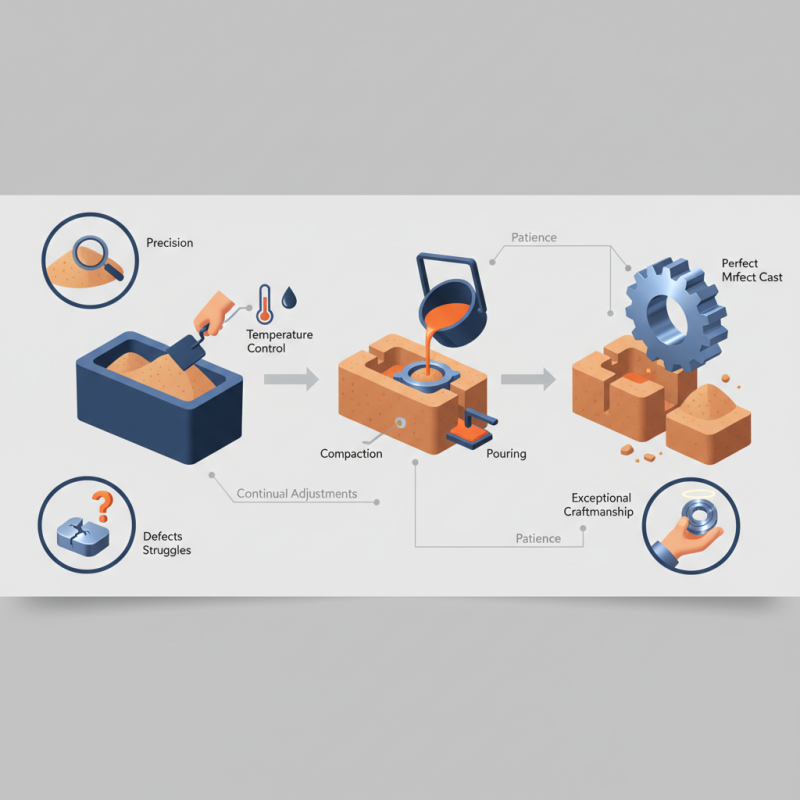
The sand molding process is essential for creating high-quality casts in manufacturing. Experts, like Dr. Emily Carter, emphasize, “Precision in the sand molding process determines the final product's quality.” This highlights the importance of mastering each step in this technique.
Understanding the nuances of the sand molding process can lead to remarkable results. However, achieving perfection is not easy. Many molders struggle with achieving the right sand mixture or proper compaction. This can lead to defects in the final cast, prompting a need for reflection and improvement.
Moreover, mistakes in the sand molding process often arise from overlooked details. Temperature control and moisture levels in sand can profoundly impact the outcome. Learning to navigate these challenges is crucial. Continual adjustments and patience are key to mastery and can lead to exceptional craftsmanship.
Understanding the Basics of Sand Molding in Metal Casting
Sand molding is a crucial process in metal casting. It involves using sand as a mold material to create shapes for casting metals. Understanding the basics is essential for achieving successful results. The right mixture of sand, clay, and water is vital in forming molds. This blend affects the mold’s strength and stability during the casting process.
Creating molds is a hands-on task. It requires attention to detail and a solid understanding of materials. Miscalculations in the sand mixture can lead to defects in the final product. For example, too much moisture can weaken the mold, causing impressions or crumble. Observing how sand curls around patterns is an important step in mastering this technique.
Another critical factor is ensuring the mold is properly compacted. Insufficient compaction can lead to air pockets, which create imperfections in the cast items. Practicing the filling process is necessary to spot these issues early. Many novice casters overlook these details, leading to frustration. Reflection on these challenges is key to improving one's skills in sand molding. Each casting experience provides valuable lessons for the next project.
Selecting the Right Sand for Optimal Molding Results
Selecting the right sand is crucial for successful sand molding. Different types of sand can significantly impact the final cast's quality. Most foundries use silica sand due to its high melting point and durability. According to industry reports, the selection of sand can influence up to 70% of the structural integrity of the final product.
The grain size of sand affects how it packs and holds shape. Finer sands create smoother surfaces, while coarser sands provide better strength. A study found that with optimal particle size, casting defects decrease by 40%. Thus, investing time in choosing the correct grain size is essential.
Tips: Always test different sand mixtures. Experimenting can uncover unique properties that enhance your specific casting process. Be mindful of impurities in the sand, as they can lead to unexpected flaws. Regular quality checks of the sand can ensure consistency. Adjustments may be necessary for varying molds and castings. Remember, even minor changes in the sand can lead to major differences in results.
Step-by-Step Guide to Creating a Sand Mold
Creating a sand mold requires attention to detail and a solid understanding of the materials involved. The sand molding process is both an art and a science. According to industry reports, around 70% of metal casting in the United States utilizes sand molds. This high percentage highlights the significance of mastering this technique for quality projects.
Start by selecting the right type of sand. Not all sand is created equal. For optimal results, a mixture of silica sand, clay, and water is essential. This combination allows for better cohesion and mold strength. Pay attention to the moisture content. Too little can lead to cracks, while too much can cause slumping. A balanced approach is vital.
When creating your mold, use a compacting method. Ensure that the sand is tightly packed around the pattern. Proper compaction prevents air pockets. This detail is often overlooked but is crucial for the mold’s integrity. Many beginners find that their molds fail because of inadequate packing. It’s a common problem that requires practice and patience. Remember, perfection comes with experience, and even seasoned professionals face challenges during this process.
Techniques for Achieving Precision in Sand Casting
Mastering the sand molding process is critical for achieving precision in sand casting. The quality of casting predominantly depends on the sand used. According to industry reports, over 70% of defects in castings arise from the molding process. Variables such as moisture content, sand grain size, and compaction are vital. A precise mixture of sand and binder is necessary to achieve desired strength.
Tips: Always test the sand mixture before a major casting project. Even a small deviation in moisture content can impact the final product. Ideal moisture levels typically range from 4% to 5%.
Compaction plays a crucial role in the strength of the mold. Insufficient compaction can lead to air pockets, resulting in flaws. A common mistake is underestimating the importance of uniform compaction. Some artisan foundries have reported that molds with uneven density showed up to 50% more defects.
Tips: Use vibration techniques to improve compaction. Invest in quality compaction tools to enhance mold integrity. Regularly check the tooling as wear and tear can cause inconsistency in results.
Common Challenges and Solutions in the Sand Molding Process
The sand molding process can be tricky. One common challenge is achieving the right mold consistency. Too dry and it crumbles; too wet and it loses shape. Finding the perfect moisture balance is essential. Use a moisture meter for accuracy. This simple tool can help ensure uniformity in the sand mix.
Another issue is dealing with air pockets. Air trapped in the mold can lead to defects in the final cast. To combat this, ensure proper compaction when creating molds. Tapping lightly and using pneumatic tools can help eliminate air gaps.
Lastly, monitor the cooling rate after pouring. A rapid cooling can result in warping or cracking. Use insulating materials to manage temperature fluctuations. Reflection on these challenges is vital. Improvement comes with practice and attention to detail. Each mistake may lead to a better understanding of the process. Embrace the learning curve.


 Metal Processing
 Automotive
 Food & Beverage
 Chemical
 Consumer Electronics
 Healthcare
 New Retail
 Semiconductor
 Welding
 Palletizing
 Loading and Unloading
 Assembly
 Bin Picking
 Gluing
 Insertion
 Polishing