Providing professional services to meet various customer needs and qualified technical support to answer multiple questions.
You ask - we answer.
How to Implement Robotic Automation for Business Efficiency?
In today's fast-evolving business landscape, companies face immense pressure to enhance efficiency and adaptability. Robotic Automation emerges as a transformative solution. A recent report by McKinsey suggests that automation can increase productivity by up to 30% in certain sectors. With tasks becoming mechanized, organizations can streamline their operations and reduce human error.
However, implementing Robotic Automation is not without its challenges. Many businesses struggle with integration into existing workflows. A study from Deloitte highlights that 58% of companies cite difficulty in identifying suitable processes for automation. This mismatch between expectations and practical outcomes raises valid concerns about the approach taken to adopt robotic systems.
Ultimately, Robotic Automation offers significant potential but requires thoughtful planning and execution. Companies must carefully assess their processes and technology readiness. Simple solutions may lead to complex issues later. Reflecting on real-world implications, balancing innovation with employee roles remains critical for sustainable success.
Understanding Robotic Automation and Its Business Applications
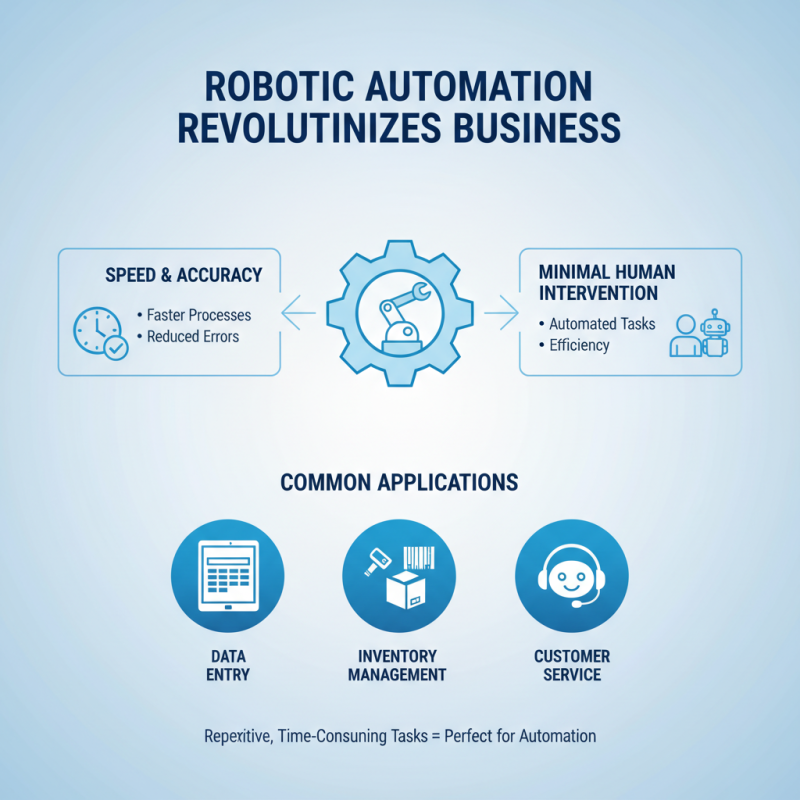
Robotic automation revolutionizes how businesses operate. It involves using technology to perform tasks with little human intervention. This can speed up processes and reduce errors. Common applications include data entry, inventory management, and customer service. These tasks are often repetitive and time-consuming, making them perfect candidates for automation.
Businesses can see significant improvements in efficiency. For instance, automating data processing can free employees to focus on higher-level analysis. However, challenges exist. Integrating new systems with existing workflows can be daunting. Employees may feel threatened by the change. It's crucial to provide adequate training and support. This approach minimizes resistance and fosters a collaborative environment.
The potential benefits of robotic automation are immense, but there's no one-size-fits-all solution. Each business has its unique processes and challenges. Assessing these individual elements is essential before implementing automation. A thoughtful approach can lead to a more efficient and adaptable business model.
Identifying Processes Suitable for Automation in Your Organization
Identifying processes suitable for automation can significantly boost business efficiency. Start by evaluating repetitive tasks within your organization. Look for processes that require minimal decision-making and have clear, structured workflows. For instance, data entry and invoice processing are often candidates for robotic automation. These tasks consume valuable time and can lead to errors when done manually.
Another area to explore is customer service. Chatbots can handle basic inquiries, freeing up human agents for more complex issues. However, not every interaction should be automated. Some customers prefer speaking with a person. This highlights the need for balance. Over-automation can lead to dissatisfied customers.
You might also consider internal processes like employee onboarding or payroll management. These can be streamlined but require careful assessment. Not all workflows fit the automation mold. Some tasks involve nuances that only human judgment can handle. Seek feedback from employees involved in these processes. Their insights can reveal potential pitfalls and areas for improvement.
Robotic Automation Impact on Business Efficiency
Choosing the Right Robotic Automation Tools and Technologies
When selecting robotic automation tools, consider usability and integration. Effective tools must fit into your existing systems seamlessly. Not all automation solutions are created equal. Some require extensive training, while others are user-friendly. Evaluate how easily your team can adapt to new technology. This decision impacts productivity.
Also, focus on scalability. Choose tools that can grow with your business. A solution that works today may fall short as your needs evolve. Avoid getting locked into a contract with a tool that lacks flexibility. However, this requires careful foresight and planning. Predicting future needs can be challenging.
Lastly, understand that not every tool will meet your expectations. Some may promise efficiency but fall short. Regularly assess performance and gather user feedback. Your team’s experience is invaluable. Embrace the imperfections in the process and continuously look for ways to improve your robotic automation strategy.
Steps to Design and Implement an Automation Strategy
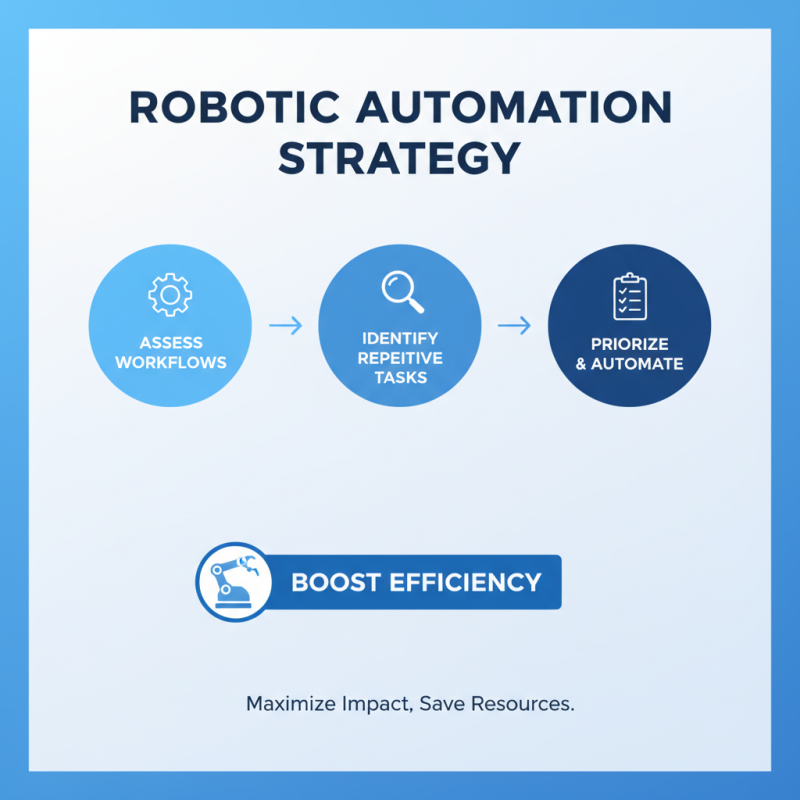
Implementing robotic automation can boost efficiency in business operations. To design and implement an automation strategy, start by assessing current workflows. Identify repetitive tasks that drain resources. Focusing on these areas can maximize the impact of automation. Create a prioritized list of tasks. This helps in selecting which processes to automate first.
Next, develop a detailed plan. Define clear goals for each automated task. Outline the specific technologies needed to achieve these goals. Collaborate with your team to gather insights. Their feedback can highlight potential challenges or gaps in your plan. Don't overlook the importance of training. Employees may resist changes, so invest time in educating them.
Once your strategy is in place, test the automation on a small scale. Monitor results closely and adjust as necessary. It's common to face unexpected challenges during this phase. Be prepared for setbacks and learn from them. Evaluate the performance of each automated task regularly. Continuous improvement should be a core principle in your automation strategy.
Measuring the Impact of Automation on Business Efficiency
Measuring the impact of robotic automation on business efficiency requires careful analysis. It’s crucial to track
key performance indicators (KPIs) before and after implementing automation. These indicators can include
productivity rates, error rates, and employee satisfaction levels. A sudden drop in productivity or morale could signify issues with the automation process.
Consider implementing pilot programs.
These small-scale tests allow businesses to gauge effectiveness without fully committing.
Monitor the results closely. Feedback from employees can provide valuable insights.
Sometimes automation can lead to unexpected challenges. It’s essential to remain flexible
and adapt the systems as needed.
Another tip involves using data analytics tools.
These tools can help visualize the benefits of automation. Analyzing data over time will reveal trends
that support the efficiency gains. Look for areas where automation may not have performed as expected.
This reflection can guide future improvements. Automation is not a one-size-fits-all solution.
Understanding its nuances is key to enhancing efficiency.
Learn useful insights, save and exchange knowledge easily with MyDobot User Center
Establish Contact with Dobot Experts
Take part in automation transformation. Let’s work together towards a more efficient tomorrow.
Contact Information
Virtual Controller Application
We provide a free trial application for the robot cloud virtual controller. Fill in the following information and we will issue you a 12-hour license.
Contact Information
File sent
The related product information has been sent, please kindly check your email.
Loading, please wait...
Join Dobot+ Ecosystem to Forge Deeper Partnerships
Dobot sincerely invites robotics software companies and hardware manufacturers to Dobot+. Together we can offer best in class solutions to end users in various industries.