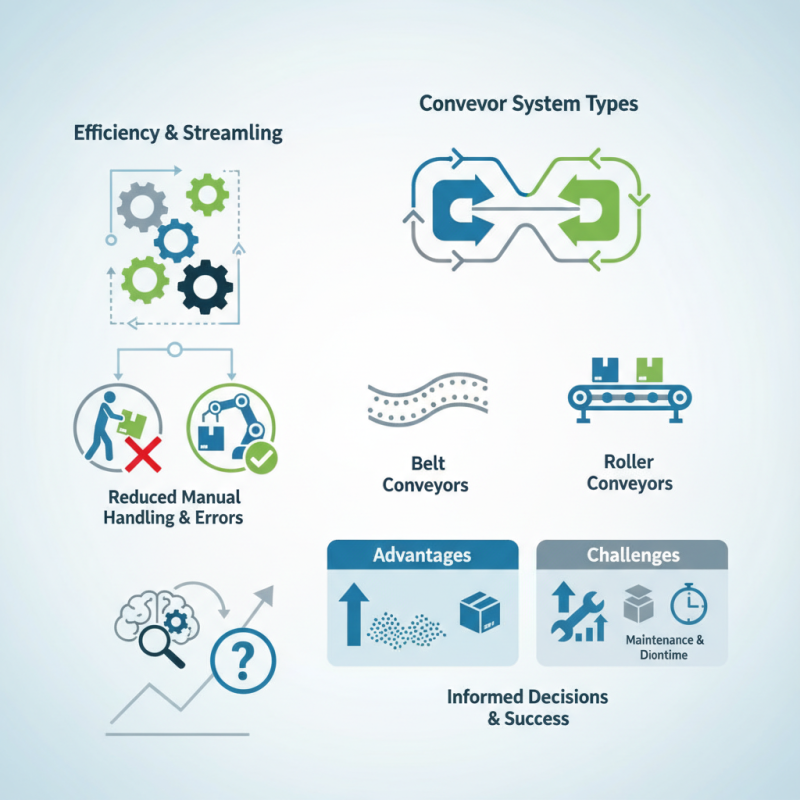
Selecting a conveyor system for your business requires careful consideration of several key factors. Start with assessing your product characteristics. Weight, size, and fragility will directly influence the type of conveyor you choose. According to industry data, nearly 30% of conveyor failures stem from mismatched load specifications, underscoring the importance of alignment between product and system.
Efficiency is another critical factor. In a recent study, organizations improved operational efficiency by over 20% after implementing tailored conveyor systems. A well-designed system can significantly reduce bottlenecks, leading to smoother workflows and improved productivity.
Tip: Conduct a thorough needs assessment. Identify workflow challenges and potential areas for improvement. Consider potential system upgrades to maintain flexibility as business needs evolve. Investing time in this analysis may prevent costly mistakes later on.
Also, don't overlook maintenance needs. Conveyor systems require regular upkeep to minimize downtime. A survey indicated that 40% of maintenance issues arise from neglected systems. Regular check-ups can ensure longevity and reliability.
Tip: Develop a maintenance schedule. Regular inspections can identify wear and tear early, saving costs in repairs and downtime.
Prioritizing these factors will lead to a more informed decision, helping you select a conveyor system that truly meets your business needs.


 Metal Processing
 Automotive
 Food & Beverage
 Chemical
 Consumer Electronics
 Healthcare
 New Retail
 Semiconductor
 Welding
 Palletizing
 Loading and Unloading
 Assembly
 Bin Picking
 Gluing
 Insertion
 Polishing