Providing professional services to meet various customer needs and qualified technical support to answer multiple questions.
You ask - we answer.
How to Choose the Best Carbon Paste Kneaders for Your Needs?
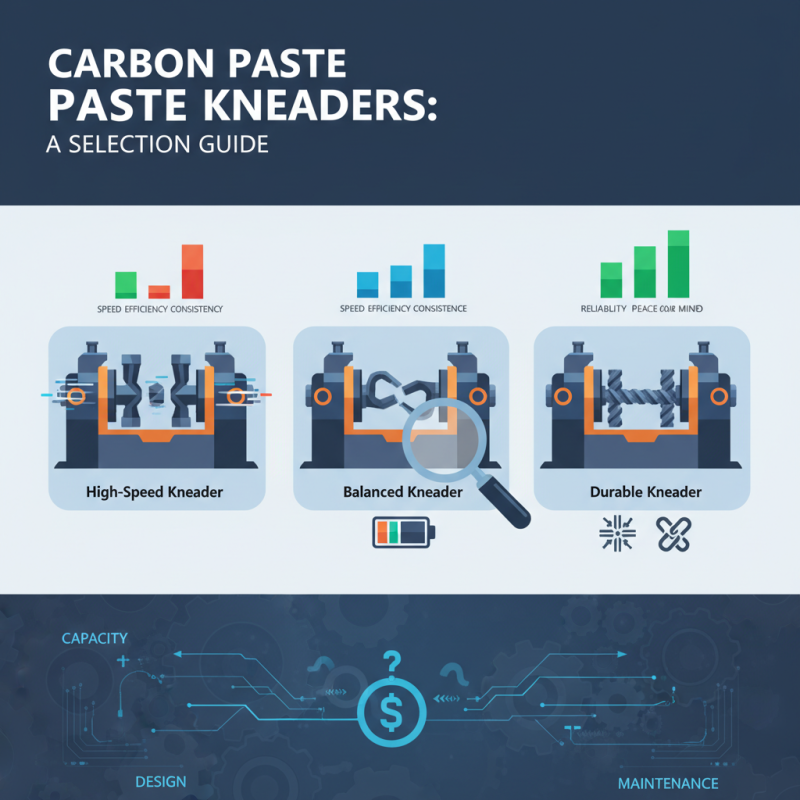
Choosing the best Carbon Paste Kneaders is crucial for various industries. These machines play a significant role in the processing of carbon materials, affecting the quality and efficiency of production. Factors like capacity, design, and durability come into play.
Experience in the field shows that not all kneaders are created equal. Some may excel in speed but lack in mixing efficiency. A balanced approach is essential. Research reveals that the right kneader can improve consistency in the final product, which is vital in applications like battery manufacturing.
Reliability is paramount. Users often report issues with lower-quality models, such as overheating or breakdowns. Investing in a reputable brand might come at a higher cost, yet delivers peace of mind. Consider the long-term benefits. Reflections on operational needs and budget constraints often lead to tough choices. Take the time to evaluate options carefully to find a Carbon Paste Kneader that meets your unique requirements.
Understanding Carbon Paste Kneaders and Their Functionality
Carbon paste kneaders are essential in industries like aluminum production and battery manufacturing. They mix carbon-based feeds uniformly. This ensures better performance in end products. According to a report by Market Research Future, the carbon paste market is expected to grow at a CAGR of 3.5% by 2025. This highlights the increasing demand for efficient processing equipment.
Understanding the functionality of these kneaders is vital. They often operate under high pressure and temperature. Their design must facilitate the uniform mixing of materials to prevent inconsistencies. A study from the International Journal of Engineering Research indicated that well-optimized kneaders improve productivity by up to 30%. However, not all kneaders are created equal. Some models struggle with large particle sizes, leading to subpar mixing.
Moreover, choosing the right model requires careful consideration of specific needs. Factors such as batch size, material characteristics, and operational environment play crucial roles. A misstep here can result in inefficiencies and increased operational costs. Companies must weigh these factors against their production goals. Balancing these elements is key to achieving optimal performance and maximizing output.
How to Choose the Best Carbon Paste Kneaders for Your Needs?
Feature
Description
Importance
Considerations
Capacity
The amount of carbon paste the kneader can handle at one time.
High
Choose based on production volume requirements.
Motor Power
The power of the motor that drives the kneading process.
High
Higher power may be needed for denser materials.
Material Quality
The quality and durability of materials used in construction.
Medium
Ensure corrosion-resistant materials for longevity.
Kneading Speed
The speed at which the kneading process occurs.
Medium
Variable speeds can enhance the quality of the paste.
Ease of Cleanliness
How easily the kneader can be cleaned after use.
High
Look for designs that facilitate easy disassembly.
Control Features
Advanced control settings, such as digital interfaces.
Medium
More controls can improve the kneading process precision.
Safety Features
Features designed to enhance user safety while operating.
High
Always prioritize equipment with proper safety mechanisms.
Key Factors to Consider When Choosing a Carbon Paste Kneader
When selecting a carbon paste kneader, focus on key factors that influence performance and efficiency. One important aspect is the kneader's design. Equipment should facilitate uniform mixing and minimize energy consumption. According to industry reports, kneaders with efficient designs can reduce energy usage by up to 30%, impacting overall production costs.
Material quality matters significantly. Choose durable materials that can withstand harsh operating conditions. Stainless steel components, for instance, enhance longevity and maintain product purity. Reports indicate that equipment with higher-grade materials can last significantly longer, reducing the need for frequent replacements.
Tip: Always conduct a cost-benefit analysis before purchasing. Look beyond initial costs and consider long-term savings on maintenance and upgrades.
Another factor is the kneader's capacity. Ensure it meets your production requirements but avoids overbuying. Oversized machinery may lead to inefficiencies and wasted resources. Assessing your operational scale is crucial. An industry study showed that 40% of facilities oversize their equipment, leading to unnecessary expenses.
Tip: Consult with experts or industry reports to determine the right capacity for your needs. Engaging with experienced professionals can provide insights into optimizing production efficiency.
Types of Carbon Paste Kneaders and Their Applications
When choosing carbon paste kneaders, understanding their types and applications is essential. There are two main categories: continuous and batch kneaders. Continuous kneaders excel in high-volume production settings. They provide consistent mixing and blending over lengthy periods. This makes them ideal for manufacturing processes that require uniformity.
Batch kneaders, on the other hand, are more adaptable to varied recipes. They allow for quick adjustments, making them perfect for smaller production runs. This flexibility is beneficial in experimental stages of product development. Mixing times can vary, and achieving the right consistency may take a few attempts.
Tips: Always assess the specific requirements of your production. Evaluate the volume and consistency needed. Factoring in your facility's layout can help optimize workflow. Choose a kneader that aligns with your production goals. Don't overlook maintenance care; it impacts longevity and performance. Test compatibility with various materials before settling.
Evaluating the Performance and Efficiency of Kneaders
When evaluating the performance and efficiency of carbon paste kneaders, several key factors come into play. The mixing quality greatly impacts production. A recent industry report indicated that incorrectly mixed materials can lead to a 15% decrease in product quality, which translates to significant financial losses over time. Understanding the kneader's design, such as blade configuration and motor power, is crucial for maximizing efficiency.
Another important aspect is the energy consumption of the kneader. Data shows that inefficient models use approximately 25% more energy than their optimized counterparts. This not only affects operating costs but also impacts overall sustainability. Additionally, monitoring wear and tear on components can be vital. Pneumatic parts, if not properly maintained, may reduce efficiency by up to 20%, leading to increased downtime for repairs.
Compatibility with various types of materials is also essential. Many kneaders struggle to effectively handle diverse compounds, often resulting in inconsistent mixing results. A thorough evaluation process can identify these shortcomings before final selection. Ultimately, choosing the right carbon paste kneader requires an understanding of these nuanced performance factors.
Budgeting for Your Carbon Paste Kneader Purchase and Maintenance
When selecting a carbon paste kneader, budgeting is vital. The initial purchase cost is just one aspect. Maintenance expenses can add up over time and impact your overall budget. According to industry reports, effective maintenance can reduce operational costs by up to 30%. This statistic emphasizes the importance of planning for both upfront and ongoing expenses.
Tips for budgeting include researching routine maintenance costs. Understand what repairs and replacements might be necessary over the lifespan of the machine. Not every kneader requires the same amount of care or parts replacements. Additionally, consider opting for training sessions for your team. Well-trained operators can help minimize wear and tear, which can save money long-term.
Another aspect to reflect on is the hidden costs of energy consumption. More efficient models reduce energy bills significantly, translating to long-term savings. An efficient kneader can consume up to 15% less energy than standard models. Assessing these factors can help you make a more informed decision. Balancing initial expenses with potential long-term savings is crucial for a successful investment.
Learn useful insights, save and exchange knowledge easily with MyDobot User Center
Establish Contact with Dobot Experts
Take part in automation transformation. Let’s work together towards a more efficient tomorrow.
Contact Information
Virtual Controller Application
We provide a free trial application for the robot cloud virtual controller. Fill in the following information and we will issue you a 12-hour license.
Contact Information
File sent
The related product information has been sent, please kindly check your email.
Loading, please wait...
Join Dobot+ Ecosystem to Forge Deeper Partnerships
Dobot sincerely invites robotics software companies and hardware manufacturers to Dobot+. Together we can offer best in class solutions to end users in various industries.