Providing professional services to meet various customer needs and qualified technical support to answer multiple questions.
You ask - we answer.
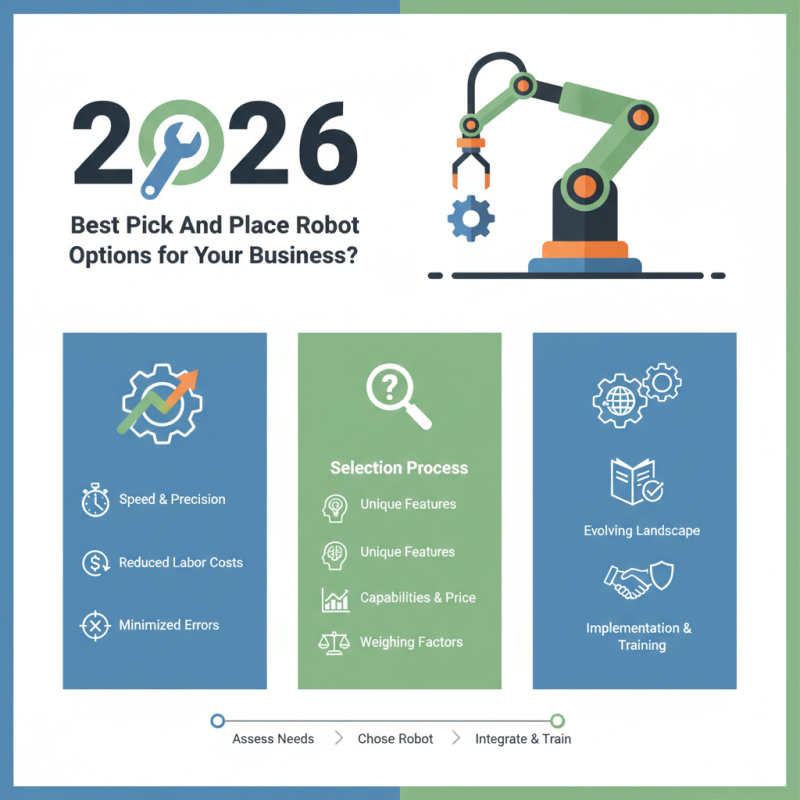
2026 Best Pick And Place Robot Options for Your Business?
In today's competitive landscape, businesses are increasingly turning to automation to boost efficiency. One key player in this transformation is the Pick And Place Robot. According to industry expert Dr. Sarah Stevens, “Pick And Place Robots are redefining the way we approach manufacturing and logistics.” This technology enhances speed and precision.
Companies can reduce labor costs and minimize errors by integrating these robots into their workflows. However, the selection process for the right robot can be daunting. Each model presents unique features, capabilities, and price points. Businesses must weigh these factors carefully. A wrong choice could lead to inefficiencies and wasted resources.
The landscape of Pick And Place Robots is evolving rapidly. Understanding the options available is crucial for informed decision-making. While the benefits are clear, businesses must also address the challenges that come with implementation and training. It’s essential to not simply jump on the automation bandwagon without thorough consideration.
Pick and place robots have gained significant traction in modern manufacturing. These machines automate repetitive tasks, improving efficiency and accuracy. According to a recent report by ABI Research, the global market for industrial robotics is projected to reach $50 billion by 2026, with pick and place robots playing a crucial role in this growth.
The versatility of pick and place robots is notable. They can handle various items, from small components to larger products. This flexibility allows businesses to adapt to shifting demands. However, implementation can pose challenges. Employees may need retraining, and programming can be complex. If not managed well, these factors may lead to operational delays.
Despite these issues, many companies have successfully integrated pick and place technology. Organizations report increased production rates and reduced labor costs. A study by the International Federation of Robotics highlighted that automation can lead to productivity improvements of up to 30%. Businesses should weigh these benefits against potential hurdles, seeking a balance that aligns with their specific needs.
Key Features to Consider in Choosing a Pick and Place Robot
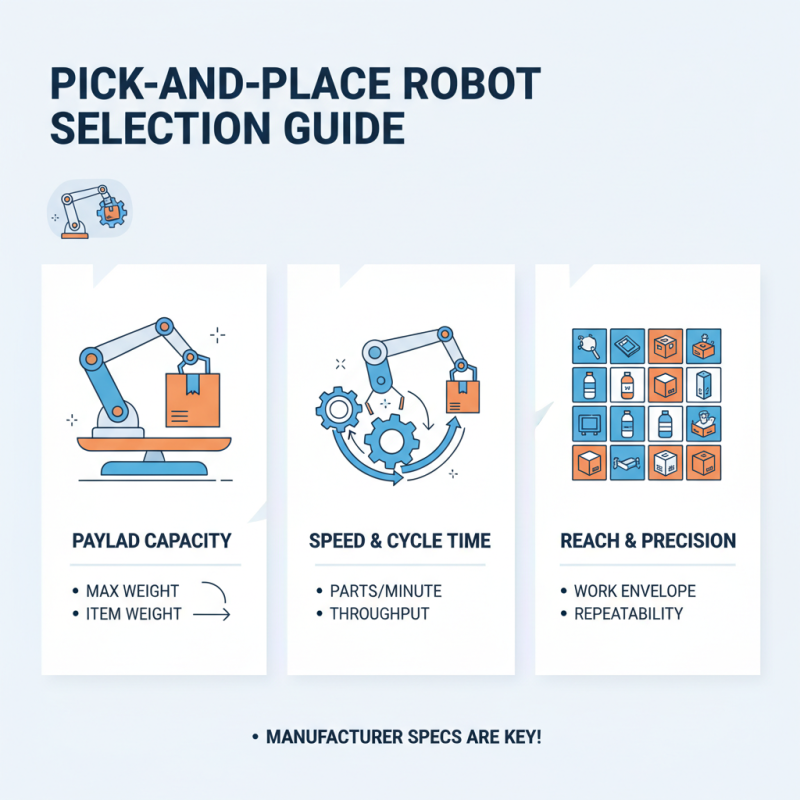
When selecting a pick and place robot, several key features should be at the forefront of your decision-making process. The payload capacity is crucial. You need to understand the weight of the items the robot will handle. If you choose a robot that cannot lift the required load, it creates inefficiencies. Always consider the maximum weight capacity listed by the manufacturer.
Speed is another key feature. A robot that operates too slowly can slow down your entire production line. Look for models that offer adjustable speed settings. This flexibility can make a significant difference in various operational scenarios. Programming ease matters too. Some robots boast user-friendly interfaces, allowing team members to customize tasks easily. However, complexity can lead to mistakes. Sometimes, simpler designs work better for varied tasks.
Lastly, consider the robot’s adaptability to different environments. Robots that handle varying tasks or products often have an edge. Yet, they may come with a trade-off in precision. This is critical for businesses seeking exact placements. Balancing these factors is not always straightforward. Take your time to assess your specific needs before making a commitment.
Top 2026 Pick and Place Robot Models for Various Industries
In 2026, pick and place robots continue to transform various industries by increasing efficiency and reducing operational costs. These robots play a critical role in manufacturing, logistics, and even agriculture. According to a recent industry report, the global market for robotic automation is expected to reach $102 billion by 2025, showing a significant growth trajectory. This surge highlights the increasing adoption of pick and place technologies.
Various models are tailored for specific tasks. For instance, high-speed pick and place robots excel in electronics manufacturing, handling delicate components with precision. A study indicates that manufacturers who integrate these robots can enhance productivity by up to 25%. However, challenges exist. Not all models are equally adaptable, and poor integration can hinder performance.
Moreover, not all robots are perfect for each industry. Food processing, for example, requires robots that meet strict hygiene standards. Some approaches may need rethinking, as flexibility often comes at the cost of speed. Practitioners must consider these factors when selecting the best model for their applications. Balancing speed and adaptability remains a reflection point for many businesses investing in automation.
Cost Analysis: Budgeting for Your Pick and Place Robot Investment
Investing in a pick and place robot can seem daunting. As businesses strive for efficiency, understanding costs becomes critical. A pick and place robot’s price can vary significantly based on features and capabilities. Basic models usually start around a few thousand dollars. More advanced options can cost tens of thousands.
Budgeting for a robot involves more than just the purchase price. Consider maintenance costs and potential upgrades. Often, companies overlook these factors. They might think everything is included in the initial price. However, training for staff and integrating new systems can add to the expenses.
Choosing the right robot for your needs requires careful consideration. What tasks will it perform? Will it need to adapt to different products? Reflecting on these questions can help shape your investment strategy. It's crucial to balance upfront costs with long-term benefits. Keep in mind that a well-chosen robot could boost productivity considerably. But make sure the total costs align with your business goals. Assessing return on investment is essential before making a decision.
2026 Best Pick And Place Robot Options for Your Business
Robot Model
Payload Capacity (kg)
Speed (items/min)
Average Cost ($)
Suitability
Model A
5
120
15,000
Light Assembly
Model B
10
80
22,000
Medium Assembly
Model C
15
60
30,000
Heavy Assembly
Model D
8
150
18,500
Packaging
Model E
20
45
40,000
Automated Warehousing
Future Trends in Pick and Place Robotics and Automation
The future of pick and place robotics is bright, yet challenging. Automation is changing how industries operate, with robots becoming essential. These machines are designed to enhance efficiency. They handle complex tasks with precision. However, integrating them requires careful planning. It's not just about buying the latest model. Businesses need to assess their unique needs.
Trends indicate growth in adaptability. More robots can now switch between tasks seamlessly. This flexibility allows companies to respond to changing demands quickly. However, many still struggle with adoption. Training staff and modifying workflow takes time. Moreover, the cost of implementation can be daunting.
Consider the push towards collaborative robots. These robots work alongside human workers. They can take on repetitive, labor-intensive tasks. But concerns exist about safety and efficiency. The balance between human and machine involvement remains delicate. Businesses must reflect on these dynamics. Understanding limitations and possibilities is crucial for success.
2026 Best Pick And Place Robot Options for Your Business
Learn useful insights, save and exchange knowledge easily with MyDobot User Center
Establish Contact with Dobot Experts
Take part in automation transformation. Let’s work together towards a more efficient tomorrow.
Contact Information
Virtual Controller Application
We provide a free trial application for the robot cloud virtual controller. Fill in the following information and we will issue you a 12-hour license.
Contact Information
File sent
The related product information has been sent, please kindly check your email.
Loading, please wait...
Join Dobot+ Ecosystem to Forge Deeper Partnerships
Dobot sincerely invites robotics software companies and hardware manufacturers to Dobot+. Together we can offer best in class solutions to end users in various industries.