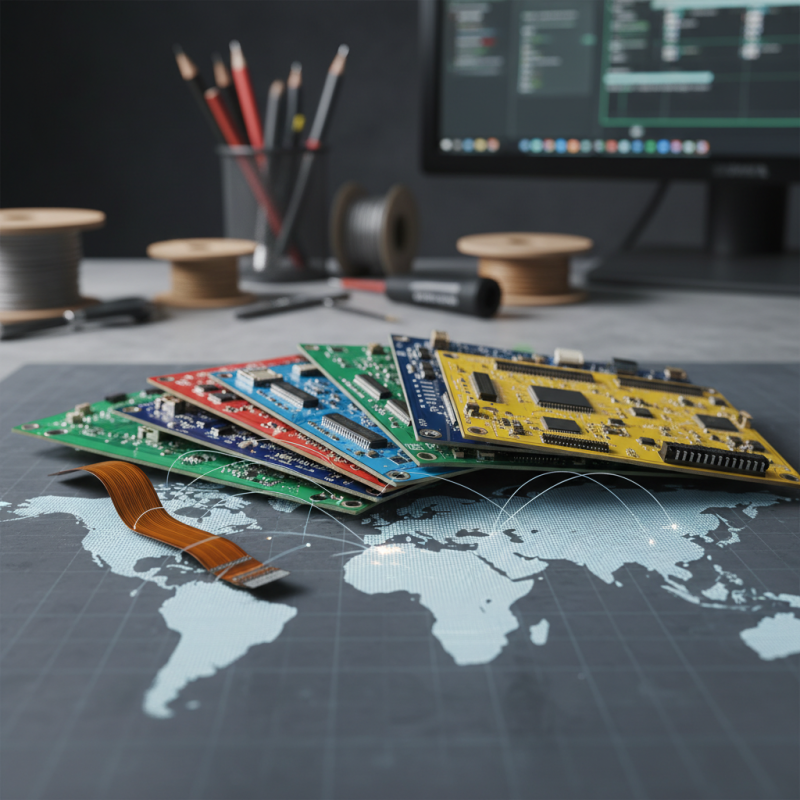
What are the Best Pcb Board Options for Global Buyers?
In today's interconnected market, choosing the right Pcb Board is crucial for manufacturers and engineers. A wide variety of options is available, each with unique specifications and benefits. Understanding these differences can significantly impact the performance and reliability of your electronic products.
Global buyers face numerous challenges in this selection process. Factors such as material quality, thickness, and layer count influence decision-making. Moreover, cost considerations often lead to tough trade-offs. Trusting experienced suppliers is essential in navigating this complex landscape.
Buyers also need to reflect on their specific needs and how different Pcb board types align with their projects. Researching suppliers and understanding industry standards can help ensure optimal performance. This analysis may initially seem overwhelming, but it is vital for long-term success in electronics development.
Identifying Key Features of PCB Boards for Global Buyers
When selecting printed circuit boards (PCBs) as a global buyer, understanding key features is crucial. The material used in PCB fabrication greatly impacts performance and reliability. Common materials include FR-4 and polyimide. Each has distinct thermal and electrical properties. For instance, polyimide is more suitable for high-temperature applications. However, it might be more challenging to find suppliers compared to FR-4.
Layer count is another important factor. Different projects require varying complexities. Basic applications might need single-layer boards, while advanced electronic devices often utilize multi-layer designs. Buyers should reflect on their product requirements carefully. Additional features, like surface finishes, can enhance longevity. Consider whether your application demands gold plating or immersion silver.
Manufacturing tolerance is also essential. High precision is necessary for intricate designs. PCB suppliers must be capable of meeting strict dimensional specifications. Yet, not all manufacturers offer the same level of expertise. This inconsistency can lead to quality issues, which buyers should proactively investigate. Proper communication with suppliers can clarify these aspects. Understanding your needs and the suppliers' capabilities is key.
Types of PCB Boards and Their Applications in Various Industries
When choosing PCB boards, it’s essential to consider their types and applications. Rigid PCBs are widely used in electronic devices. They offer durability and reliability, making them ideal for consumer electronics. Flexible PCBs, on the other hand, provide versatility. They bend and twist, making them useful in compact devices like smartphones.
Tips: Before purchasing, evaluate your product’s space and design needs. Understanding the environment where the PCB will operate can prevent future failures.
Another type is the rigid-flex PCB. This option combines the benefits of both rigid and flexible boards. It is perfect for projects requiring complex connections in limited space. Moreover, multi-layer PCBs allow for more circuits in a compact design. They are prevalent in telecommunications and aerospace industries.
Tips: Always assess thermal considerations in your design. Heat can significantly affect performance, especially for high-frequency applications.
Comparative Analysis of Global PCB Manufacturers and Suppliers
When considering PCB manufacturers globally, it's crucial to analyze their capabilities and offerings. Many manufacturers specialize in various types of boards, such as rigid, flexible, and multi-layer PCBs. Each type holds unique benefits. Rigid boards provide durability, while flexible options enable more innovative designs. Multi-layer boards are ideal for complex circuits.
Tips: Always evaluate the turnaround time during your selection. A longer lead time may affect your project schedule. Also, ensure that the manufacturer adheres to quality standards. This can significantly impact the performance of your final product.
In comparing different suppliers, transparency in communication is essential. Some companies may lack clarity about their processes or pricing. It’s vital to request detailed quotations and confirm their production capabilities. Some suppliers might promise fast delivery but compromise on quality. Prioritizing reliable partners will help mitigate risk in your procurement process.
Factors Influencing PCB Quality and Performance in the Market
When selecting a PCB board, quality and performance are paramount. Factors like material type, layer count, and manufacturing techniques significantly influence these aspects. A report by IPC reveals that over 60% of PCB failures stem from poor material selection. This statistic underscores the need for careful consideration of base materials such as FR-4 and CEM-3, which are widely regarded for their reliability.
Manufacturing processes play a vital role in PCB durability. Techniques like double-sided assembly and surface mount technology improve performance. However, inconsistencies in production can lead to defects. A study indicated that nearly 15% of PCB defects result from insufficient quality control. It’s essential to assess the manufacturing capabilities of suppliers.
Tip: Always request detailed manufacturing guidelines before placing orders. Assessing a supplier’s quality assurance processes can save costs in the long run.
Environmental factors also impact PCB performance. Temperature fluctuations can degrade material integrity. According to research, PCBs can experience a significant drop in performance in extreme conditions. Ensure that the chosen PCB can withstand the intended application environment.
Tip: Consider the specific operating conditions your PCB will face. This consideration will help in choosing a board that meets your needs effectively.
What are the Best PCB Board Options for Global Buyers? - Factors Influencing PCB Quality and Performance in the Market
| PCB Type | Material | Layer Count | Thickness (mm) | Cost ($/m²) | Lead Time (Days) |
| FR-4 | Glass-Fiber Epoxy | 1-12 | 0.2 - 3.2 | 30-60 | 15-25 |
| Aluminum | Aluminum Core | 1-8 | 0.5 - 2 | 40-80 | 20-30 |
| Rigid-Flex | Polyimide | 1-10 | 0.2 - 0.8 | 50-100 | 25-35 |
| High-Frequency | PTFE | 1-16 | 0.5 - 1.6 | 60-120 | 30-40 |
Cost Considerations and Budgeting for PCB Purchases Abroad
When considering PCB purchases globally, cost is a major factor. The manufacturing process varies by country, affecting prices significantly. For example, labor costs in Asia are often lower than in Europe or North America. This disparity can lead to substantial savings. However, cheaper options may compromise quality. It's essential to balance cost with performance to ensure proper functionality.
Before making a purchase, create a detailed budget. Identify crucial aspects like design complexity, materials, and delivery times. Consider unexpected expenses as well. Shipping fees, customs duties, and other hidden costs can add up. Effective budgeting can lead to better financial decisions without sacrificing quality.
**Tip:** Always request quotes from multiple suppliers. Compare not just the prices, but also the included services and quality guarantees.
Understanding the total cost of ownership is vital. While an initial lower price may seem appealing, long-term costs can rise due to poor performance or product failures. This could result in rework or redesign, escalating expenses beyond your initial budget.
**Tip:** Evaluate potential suppliers' reputations. Seek reviews or case studies, as these can provide insight into their reliability and quality control processes.
Cost Comparison of PCB Board Options for Global Buyers


 Metal Processing
 Automotive
 Food & Beverage
 Chemical
 Consumer Electronics
 Healthcare
 New Retail
 Semiconductor
 Welding
 Palletizing
 Loading and Unloading
 Assembly
 Bin Picking
 Gluing
 Insertion
 Polishing